

7 Aquarium Plant Mistakes Almost Every Beginner Makes
Live aquarium plants can completely transform a fish tank. They add color, create hiding places for fish and shrimp, and give your aquarium a much more natural look.
But if you’re new to planted tanks, it’s easy to make a few mistakes that leave you wondering why your plants are melting, turning yellow, or refusing to grow.
The good news? Most aquarium plant problems are surprisingly easy to fix.
Here are 7 of the most common aquarium plant mistakes beginners make — and what to do instead.

1. Burying the Rhizome
This is one of the biggest mistakes we see with plants like Anubias and Java Fern.
These plants have a thick horizontal stem called a rhizome, where the leaves and roots grow from. If you completely bury the rhizome underneath your gravel or substrate, it can begin to rot.
Instead, keep the rhizome exposed.
You can place the roots into the substrate while leaving the rhizome above it, or attach the entire plant to driftwood or rocks.
Anubias and Java Fern are actually some of the best plants for aquariums without nutrient-rich substrate because they can happily grow attached to hardscape.

2. Assuming Melting Means Your Plant Is Dead
You add a beautiful new plant to your aquarium and a few days later...
The leaves start turning transparent, brown, or falling apart.
Don't panic.
Many aquarium plants are grown emersed, meaning their leaves are grown above water before being sold. Once they're placed completely underwater, the plant may shed some of its old leaves while producing new leaves better suited for submerged growth.
This process is commonly called plant melt.
Instead of immediately throwing the plant away, look at its roots and base. If they're still healthy and firm, give the plant some time to adjust.
Remove badly damaged leaves and watch for fresh growth.

3. Giving Your Plants Too Much Light
More light doesn't always mean more growth.
Beginners sometimes leave their aquarium lights running for 12, 14, or even 16 hours because they assume their plants will grow faster.
Unfortunately, that can quickly turn into an algae problem.
For many beginner planted tanks, starting around 6–8 hours of light per day is plenty. From there, you can adjust based on how your plants and aquarium respond.
Using a timer also makes it much easier to keep your lighting schedule consistent.
Remember: your plants need darkness too.

4. Forgetting That Plants Need Nutrients
Fish aren't the only living things in your aquarium that need food.
Aquarium plants need nutrients to produce healthy roots, stems, and leaves.
Without enough nutrients, you may notice:
- Yellowing leaves
- Holes developing in older leaves
- Slow or stalled growth
- Pale new growth
- Weak root systems
Different plants also absorb nutrients differently.
Plants like Anubias and Java Fern primarily take nutrients from the water column, making a quality liquid fertilizer useful.
Heavy root feeders like Amazon Swords and Cryptocoryne can benefit greatly from root tabs placed underneath the substrate.
If your plants aren't growing despite having adequate lighting, nutrients are one of the first things worth checking.

5. Planting Every Plant the Same Way
Not every aquarium plant belongs in the substrate.
Some plants should be buried. Some should be attached to rocks or driftwood. Others should simply float.
For example:
Amazon Swords, Crypts, and Jungle Val are typically planted into the substrate.
Anubias and Java Fern should have their rhizomes exposed and can be attached to hardscape.
Java Moss can be attached to rocks, wood, or decorations.
Floating plants should remain at the surface.
Knowing how your particular plant naturally grows can make a huge difference in its long-term health.

6. Constantly Moving Your Plants Around
You plant something.
Two days later, you don't like where it is.
So you move it.
Then you decide it looked better in the first spot...
Aquarium plants generally appreciate stability.
Every time you uproot a plant, you can disturb its developing root system and force it to adjust to slightly different lighting, flow, and conditions.
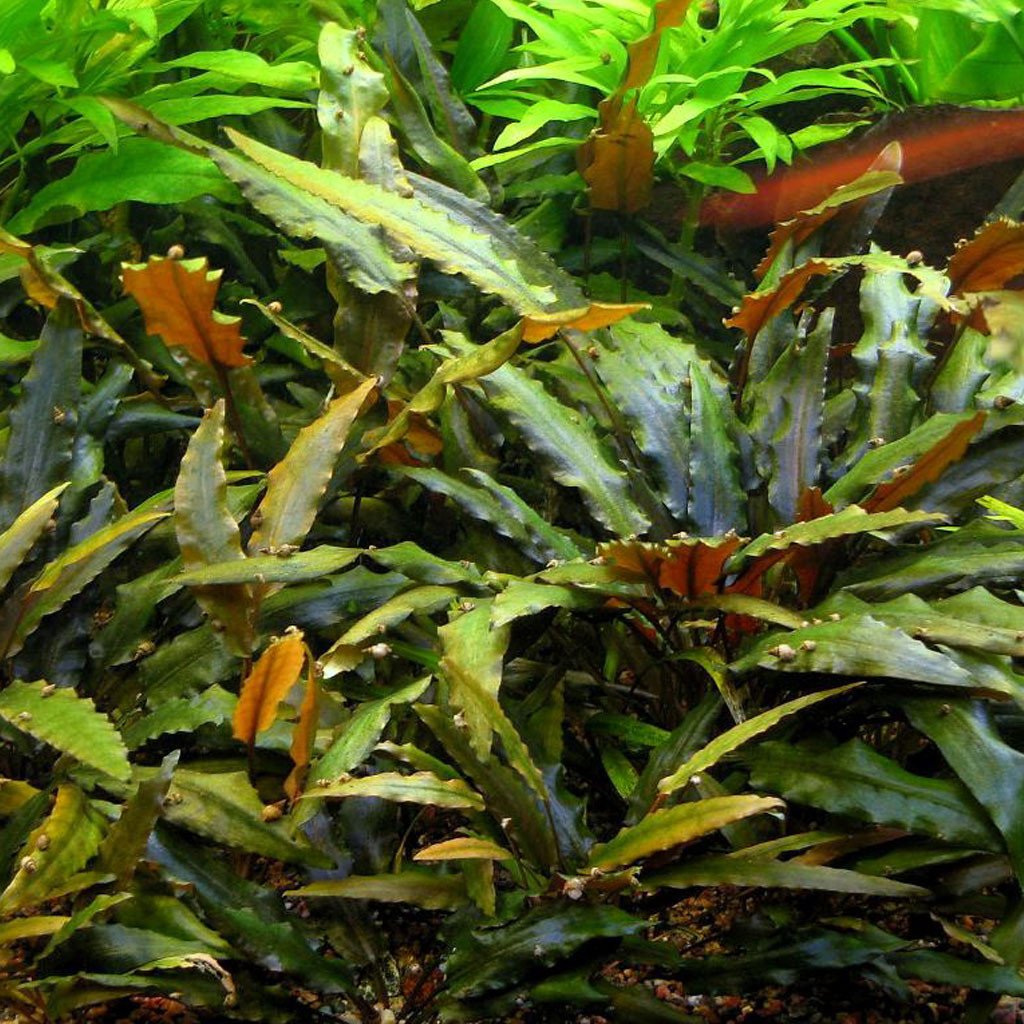
This is especially important with plants like Cryptocoryne, which can be sensitive to sudden environmental changes.
Try to plan your aquascape before planting and then give your plants time to settle in.
Your aquarium won't look finished overnight.
Part of the fun is watching it grow into the aquascape you imagined.

7. Choosing Plants That Don't Match Your Tank
One of the easiest ways to struggle with aquarium plants is choosing species that aren't suited for your setup.
A beautiful plant isn't necessarily the right plant for every aquarium.
Before buying, consider:
Lighting: Is your tank low, medium, or high light?
Substrate: Are you using gravel, sand, aquasoil, or no substrate at all?
Tank size: How large will the plant eventually become?
Temperature: Can the plant handle your aquarium's temperature?
Fish: Are your fish likely to uproot or eat it?
CO₂: Does the plant require supplemental CO₂, or can it thrive in a low-tech aquarium?
Beginners will usually have the most success starting with hardy, forgiving plants such as Anubias, Java Fern, Amazon Sword, Cryptocoryne, Jungle Val, and Java Moss.
Once you've learned how plants respond to your aquarium, you can start experimenting with more demanding species.

The Secret Is Keeping It Simple
You don't need an expensive CO₂ system or complicated aquascaping setup to have a beautiful planted aquarium.
Start with easy plants.
Give them appropriate lighting and nutrients.
Plant them correctly.
And most importantly, give them time to grow.
Plants are living organisms, and they won't always look perfect immediately after being shipped, planted, or moved into a new aquarium.
A little patience goes a long way.
Happy planting! 🌿