

Can Bettas Damage Aquarium Plants?
If you’re setting up a planted betta tank, you may wonder: Can bettas damage aquarium plants?
The short answer is — sometimes, but usually not in a serious way.
In most cases, bettas actually do very well in planted aquariums and benefit from the extra cover, resting areas, and calmer environment live plants provide. However, there are a few situations where a betta may nip, uproot, or stress certain plants.
Here’s what you should know.

Why Bettas Usually Love Live Plants
Bettas naturally come from slow-moving waters filled with vegetation. In the wild, they spend time resting near leaves, hiding between plants, and exploring dense cover.
A planted tank helps create a more natural and comfortable environment by providing:
- Resting places near the surface
- Reduced stress from open spaces
- Gentle water movement
- Better water quality
- Natural enrichment and exploration
Many bettas will even sleep directly on broad leaves like Anubias or Amazon Swords.

How Bettas Can Damage Plants
While bettas are generally plant-safe, there are a few ways they can accidentally or intentionally damage aquarium plants.
1. Digging or Uprooting Plants
Some bettas become territorial and may dig around the base of plants while exploring or creating resting spots.
This is more common with:
- Newly planted stems
- Loose carpeting plants
- Tanks with lightweight substrate
Plants like Monte Carlo or Dwarf Hairgrass may occasionally get uprooted if they haven’t fully rooted yet.
2. Tearing Delicate Leaves
Bettas may brush against or nip softer plants with fragile leaves.
Thin-leaf plants can sometimes become damaged simply from regular movement through the tank.
More delicate plants include:
- Cabomba
- Hornwort
- Fine stem plants
This usually isn’t severe, but damaged leaves may melt or break over time.
3. Bubble Nest Behavior
Male bettas often build bubble nests near floating plants or broad leaves. Occasionally, they may push plants around or rearrange floating species while doing this.
Floating plants like:
- Duckweed
- Frogbit
- Salvinia
may shift around frequently in active betta tanks.

Plants That Work Great With Bettas
The best plants for betta tanks are hardy, low-maintenance, and provide broad resting surfaces or gentle cover.
Some excellent choices include:
- Anubias
- Java Fern
- Amazon Sword
- Java Moss
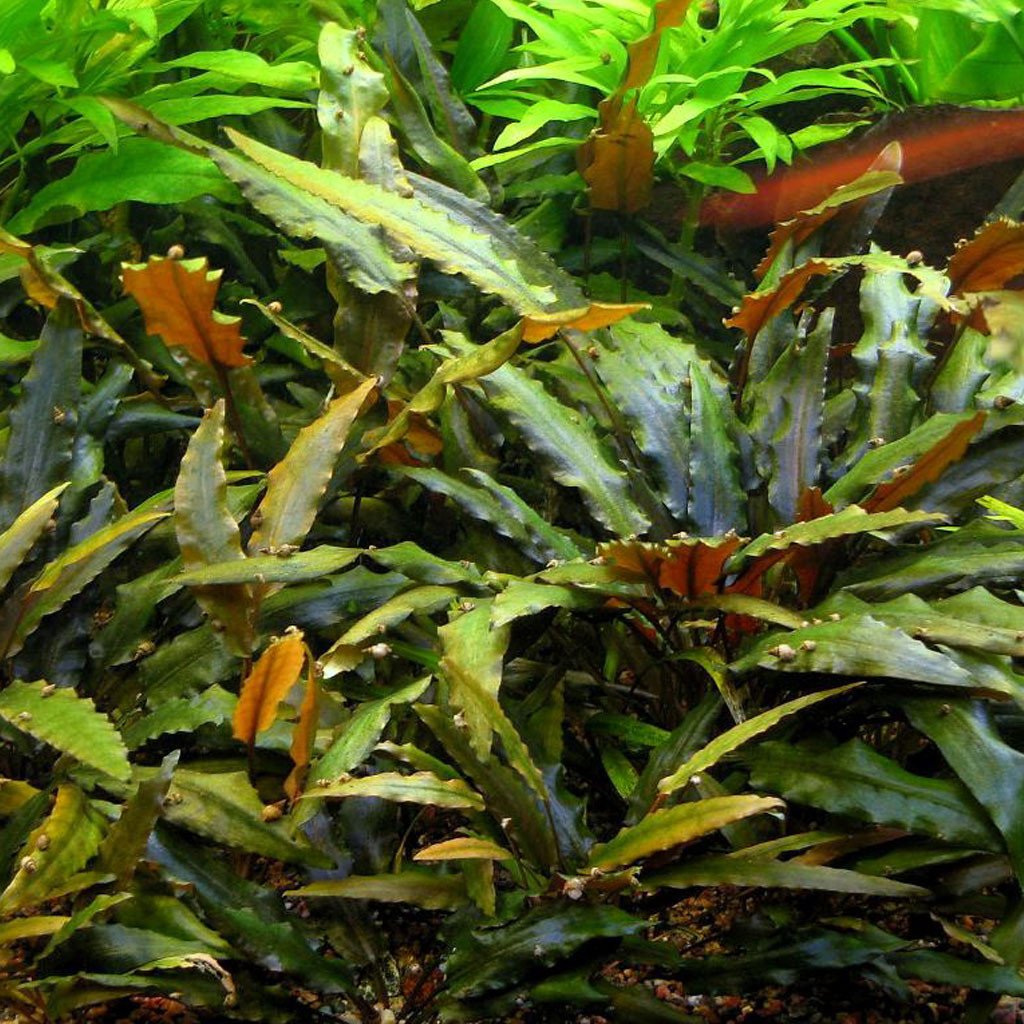
- Cryptocoryne
- Jungle Val
- Water Wisteria
- Floating plants like Frogbit or Red Root Floaters
These plants tolerate betta behavior well and create a comfortable environment for the fish.

Plants Bettas May Struggle With
Very delicate or freshly planted species can occasionally have issues in betta tanks, especially if the fish is highly active.
Plants that may need extra care include:
- Monte Carlo
- Dwarf Baby Tears
- Cabomba
- Newly planted stem bunches
These aren’t impossible to keep with bettas — they just benefit from stronger rooting and stable placement.

How to Prevent Plant Damage in a Betta Tank
Fortunately, preventing plant damage is usually easy.
Secure New Plants Well
Make sure rooted plants are planted deeply enough and stem plants are anchored properly.
Use Heavier Substrate
Aquarium soil or planted substrate helps prevent uprooting compared to very light gravel.
Add Resting Spots
Broad-leaf plants reduce the chance your betta will push through delicate stems constantly.
Avoid Sharp Plastic Decor
Sometimes people mistake torn fins or stressed behavior for plant problems when the real issue is rough decorations.
Live plants are usually much safer for bettas than hard plastic ornaments.

Final Thoughts
Most bettas do not seriously damage aquarium plants. In fact, live plants are one of the best additions you can make to a betta aquarium.
While some bettas may uproot delicate plants or occasionally tear soft leaves, choosing hardy species and allowing plants time to establish usually prevents major issues.
A healthy planted tank often leads to:
- Happier bettas
- Better water quality
- Reduced stress
- More natural behavior
- A more beautiful aquarium overall
For most aquarists, live plants and bettas are an excellent combination.