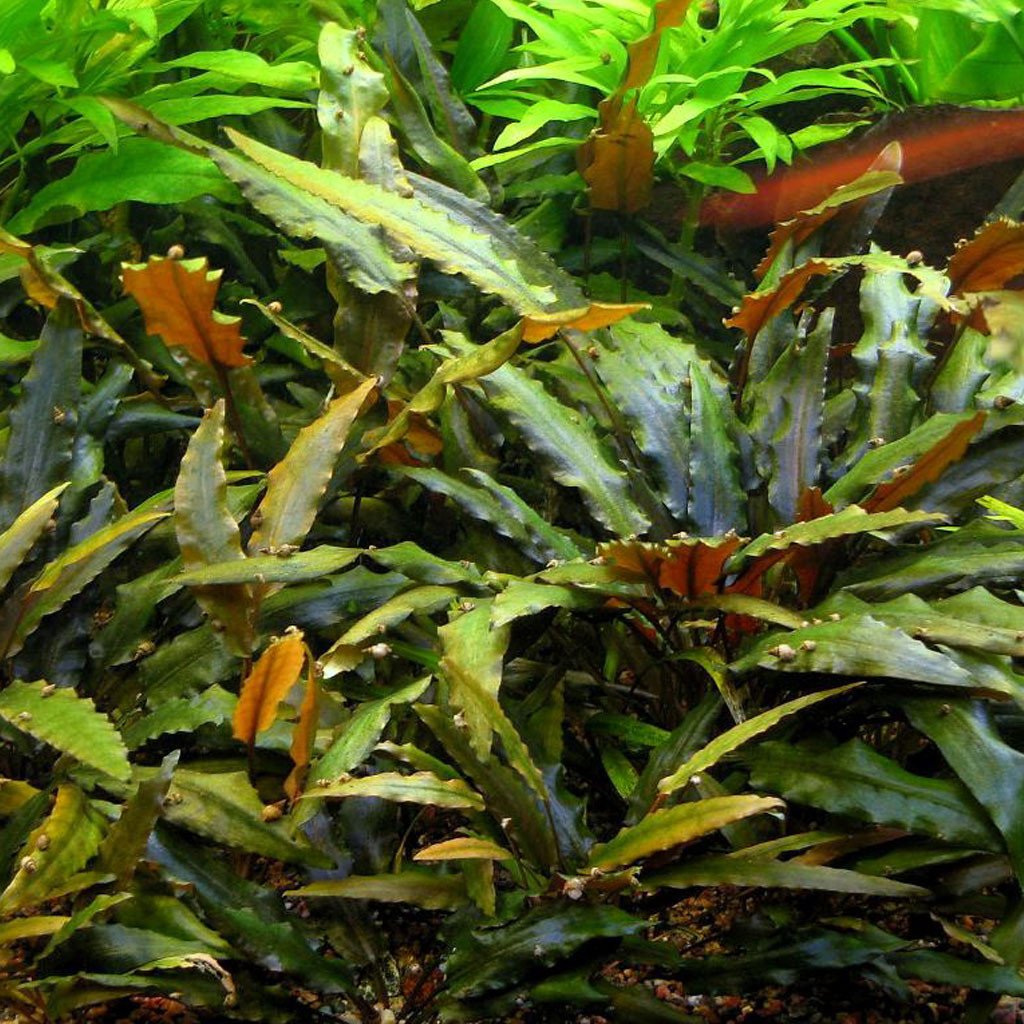


Complete Guide to Anubias Care
Anubias is one of the most popular aquarium plants in the hobby—and for good reason. These hardy, low-maintenance plants thrive in a wide range of aquarium conditions, making them an excellent choice for beginners and experienced aquascapers alike.
Whether you're setting up your first planted tank or looking for a durable plant that can thrive alongside fish, Anubias is often one of the best choices available.
In this complete guide, we'll cover everything you need to know about growing healthy Anubias plants.

What Is Anubias?
Anubias is a genus of aquatic plants native to rivers and streams in West and Central Africa. In the aquarium hobby, they are prized for their thick, dark green leaves and ability to grow in low-light environments.
Unlike many aquarium plants, Anubias grows from a horizontal stem called a rhizome rather than developing extensive root systems in the substrate.
Popular varieties include:
- Anubias Nana
- Anubias Nana Petite
- Anubias Barteri
- Anubias Hastifolia
- Anubias Congensis
- Anubias Coffeefolia
While each variety has a slightly different appearance, their care requirements are largely the same.

Why Aquarists Love Anubias
There are several reasons Anubias has become a staple in planted aquariums:
- Extremely beginner-friendly
- Tolerates low light
- Doesn't require CO2
- Slow-growing and easy to maintain
- Can be attached to rocks and driftwood
- Resistant to many plant-eating fish
- Compatible with shrimp, snails, and bettas
Its versatility allows it to fit naturally into almost any aquascape style.

Ideal Water Parameters
One of Anubias' greatest strengths is its adaptability.
Recommended parameters:
- Temperature: 72°F–82°F
- pH: 6.0–8.0
- GH: 3–15 dGH
- KH: 2–12 dKH
Anubias can tolerate conditions outside these ranges, making it suitable for many community aquariums.

Lighting Requirements
Anubias performs best under low to moderate lighting.
Because it grows slowly, intense lighting can actually create problems by encouraging algae growth on the leaves.
Ideal lighting:
- Low light: Excellent
- Medium light: Excellent
- High light: Acceptable if algae is controlled
Many hobbyists successfully grow Anubias in tanks illuminated only by standard LED aquarium lights.

Does Anubias Need CO2?
No.
Anubias grows perfectly well without supplemental CO2, which is one reason it is recommended so often for beginners.
Adding CO2 can increase growth rates somewhat, but it is not necessary for maintaining healthy plants.

How to Plant Anubias Correctly
The most common mistake people make is burying the rhizome.
The rhizome is the thick horizontal stem from which leaves and roots emerge. If it is buried under substrate, it will often rot and eventually kill the plant.
Correct Method
Attach the rhizome to:
- Driftwood
- Rocks
- Decorations
You can secure it using:
- Cotton thread
- Fishing line
- Aquarium-safe glue
Over time, the roots will naturally attach themselves to the hardscape.
Incorrect Method
Avoid burying the rhizome completely in:
- Gravel
- Sand
- Aquasoil
The roots can be buried lightly, but the rhizome should always remain exposed.

Fertilizer Requirements
Although Anubias is undemanding, it still benefits from nutrients.
Because it absorbs much of its nutrition directly from the water column, liquid fertilizers are often the most effective option.
For best results:
- Dose a complete liquid fertilizer regularly
- Maintain consistent water changes
- Avoid dramatic nutrient swings
Root tabs are generally less important for Anubias than they are for heavy root feeders like Amazon Swords or Cryptocoryne species.

Growth Rate
Anubias is considered a slow-growing plant.
Under typical aquarium conditions, you may only see a few new leaves emerge each month.
While some aquarists wish it grew faster, the slow growth offers benefits:
- Less trimming required
- Easier maintenance
- Stable appearance in aquascapes
- Long-lasting leaves
Patience is key when growing Anubias.

Why Is My Anubias Turning Yellow?
Yellowing leaves may indicate:
- Nutrient deficiencies
- Aging leaves
- Poor water quality
- Excessive algae coverage
Older leaves naturally die off over time and can be removed once they become significantly damaged.
Regular fertilization and water changes usually resolve nutrient-related issues.

Why Is My Anubias Melting?
Unlike many stem plants, Anubias rarely experiences severe melting.
When it does occur, common causes include:
- Buried rhizomes
- Sudden environmental changes
- Severe nutrient deficiencies
- Shipping stress
If your plant recently arrived from a nursery or online retailer, minor leaf loss may occur while it adjusts to its new environment.
Propagating Anubias
Anubias is one of the easiest aquarium plants to propagate.
Once the rhizome grows long enough, simply:
- Remove the plant.
- Locate a healthy rhizome section.
- Cut between growth points using clean scissors.
- Ensure each section contains several leaves and roots.
- Reattach the new sections to hardscape.
The new plants will continue growing independently.

Best Tank Mates for Anubias
Anubias works well with:
- Bettas
- Tetras
- Rasboras
- Corydoras
- Shrimp
- Snails
- Angelfish
- Discus
Its thick leaves also make it more resistant to damage from fish that occasionally nibble on plants.

Is Anubias Right for Your Aquarium?
If you're looking for a beautiful, durable, and beginner-friendly aquarium plant, Anubias is difficult to beat.
Its ability to thrive in low light, grow without CO2, and attach to driftwood or rocks makes it one of the most versatile plants available. While it won't grow quickly, its resilience and ease of care more than make up for its slow growth rate.
Whether you're building your first planted tank or enhancing a mature aquascape, Anubias remains one of the best aquarium plants you can add to your collection.