

How Fast Do Aquarium Plants Grow? (Real Expectations)
One of the biggest misconceptions in the hobby is how quickly aquarium plants should grow. You see lush aquascapes online and assume your tank should look like that in a week or two. Then when it doesn’t, it feels like something is wrong.
The reality is much simpler.
Aquarium plants grow on their own timeline, and understanding that timeline is what separates frustration from success.

🌱 The Truth About Growth Speed
Most aquarium plants do not grow overnight.
In a typical setup:
- Slow growers can take weeks to show noticeable change
- Moderate growers show progress in 1–2 weeks
- Fast growers can show visible growth in just a few days
But even fast-growing plants won’t instantly fill your tank. Healthy growth is gradual, consistent, and natural.

🌿 Growth Rates by Plant Type
Slow Growers (Patience Required)
Examples:
- Anubias
- Java Fern
- Mosses
These plants focus on stability, not speed. You might only see a new leaf every couple of weeks, but they’re extremely hardy and low maintenance.
Moderate Growers (Balanced Growth)
Examples:
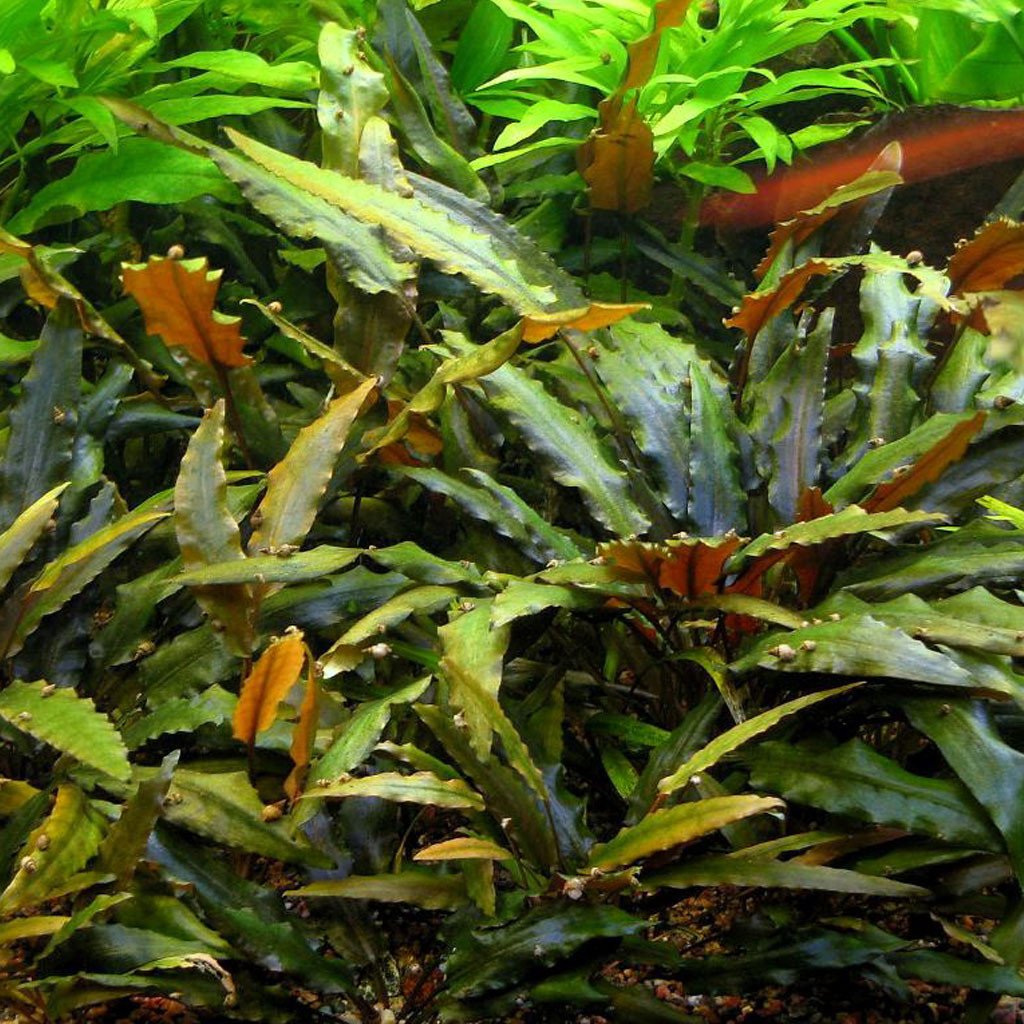
- Cryptocoryne (Crypts)
- Staurogyne Repens
- Amazon Sword
These plants typically take a couple of weeks to establish, then begin growing steadily. Once settled, they can become the backbone of your tank.
Fast Growers (Quick Results)
Examples:
- Hornwort
- Cabomba
- Water Wisteria
- Floating plants like Duckweed
These can grow rapidly, especially in good conditions. You may notice visible changes in just a few days.

⚠️ Why Your Plants Might Feel “Slow”
Even fast-growing plants can seem like they’re not growing at all if something is off.
Here are the most common reasons:
1. Adjustment Period (This Is Normal)
After shipping or being introduced to a new tank, plants often go through a transition phase.
You may notice:
- Yellowing leaves
- Melting
- Little to no growth
This is completely normal. The plant is adapting to your water, lighting, and nutrients. Growth usually picks up after 1–3 weeks.
2. Lighting Isn’t Strong Enough
Light is one of the biggest drivers of growth.
- Too little light = slow or stalled growth
- Balanced light = steady, healthy growth
You don’t need extreme lighting, but consistency matters.
3. Lack of Nutrients
Plants need food just like fish do.
Without proper nutrients:
- Growth slows dramatically
- Leaves may turn pale or transparent
This is where root tabs and liquid fertilizers make a huge difference.
4. CO2 (Optional, But Powerful)
CO2 isn’t required for most tanks, but it accelerates growth significantly.
Without CO2:
- Growth is slower, but still healthy
With CO2:
- Faster growth
- Fuller, denser plants

🧠 What “Healthy Growth” Actually Looks Like
Instead of expecting explosive growth, look for these signs:
- New leaves forming
- Strong color (green or red depending on species)
- Roots anchoring into substrate
- Gradual increase in plant size
If you see these, your tank is on the right track.

⏱️ Realistic Timeline
Here’s what you should expect:
Week 1–2:
Adjustment phase, possible melting, minimal growth
Week 2–4:
New leaves begin forming, roots establish
Month 1–2:
Noticeable growth and filling in
Month 2+:
Tank begins to look full and established
This is the part most people underestimate. Great planted tanks are built over time, not days.

🌿 How To Speed Up Growth (The Right Way)
If you want faster results, focus on these:
- Consistent lighting schedule (6–8 hours daily)
- Use both root tabs and liquid fertilizer
- Maintain stable water conditions
- Avoid constantly moving plants around
- Be patient during the adjustment phase
Growth improves when everything is consistent, not when everything is pushed to the max.

Final Thoughts
Aquarium plants aren’t meant to grow instantly.
They grow steadily, naturally, and over time. The tanks you see online didn’t happen overnight. They were built through patience, consistency, and proper care.
If your plants are slowly improving, you’re doing it right.