

How Often Should You Trim Aquarium Plants? (Beginner-Friendly Guide)
Trimming aquarium plants can feel intimidating—especially if you’re worried about hurting them. The truth is, trimming is not only safe, it’s necessary for healthy growth. When done correctly, trimming helps plants grow fuller, prevents algae, and keeps your tank looking clean instead of overgrown.
If you’ve ever wondered when, how often, or how much to trim, this guide breaks it down simply.

Why Trimming Aquarium Plants Matters
Aquarium plants don’t stop growing just because they run out of space. When left untrimmed, they can:
-
Block light from reaching lower leaves
-
Trap debris and waste
-
Slow overall plant growth
-
Create dead zones where algae thrives
Regular trimming keeps plants actively growing and helps them outcompete algae for nutrients.
How Often Should You Trim Aquarium Plants?
The short answer: it depends on the type of plant. Here’s a simple breakdown.

Fast-Growing Stem Plants
Trim every 1–2 weeks
Examples include:
-
Anacharis / Elodea
-
Hornwort
-
Rotala
-
Hygrophila
These plants grow quickly and are excellent at soaking up excess nutrients—but only if they’re trimmed regularly.
How to trim:
Cut the top portion of the plant and replant the healthy tops. Remove the older, woody bottoms if they start looking thin.

Rosette Plants (Root Feeders)
Trim every 4–6 weeks (or as needed)
Examples include:
-
Amazon Swords
-
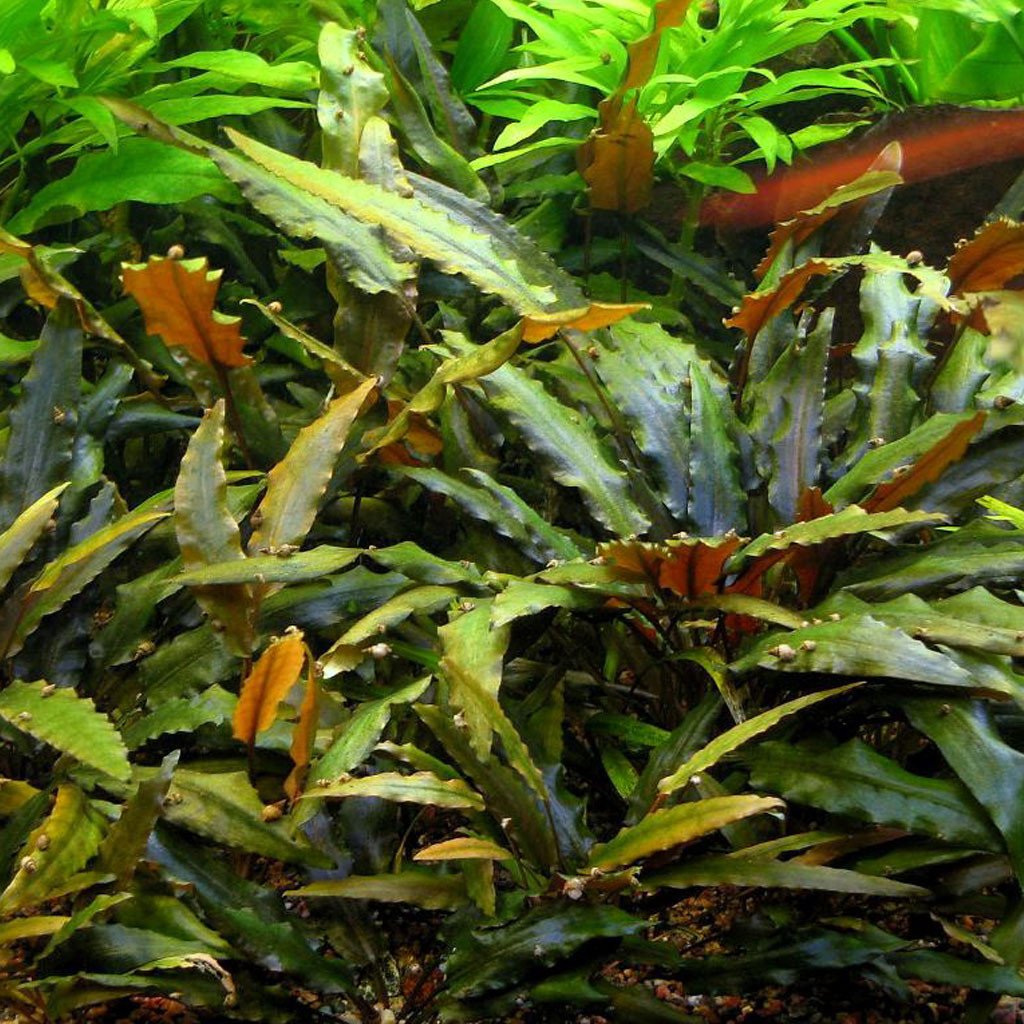
Cryptocoryne varieties
-
Jungle Val
These plants grow from a central crown. You don’t trim the top—instead, remove older outer leaves.
How to trim:
Gently pull or snip yellowing or damaged leaves near the base. Never cut straight across the plant.

Rhizome Plants (Attach-to-Hardscape)
Trim every 6–8 weeks (light trimming only)
Examples include:
-
Anubias
-
Java Fern
-
Windelov Java Fern
These are slow growers and don’t need frequent trimming.
How to trim:
Remove older or damaged leaves near the rhizome. Never bury the rhizome, and avoid cutting it unless propagating.

Mosses
Trim every 2–4 weeks
Examples include:
-
Java Moss
-
Christmas Moss
-
Fissidens
Moss grows unevenly and can trap debris if left untouched.
How to trim:
Use scissors to lightly “shape” the moss. Siphon out loose clippings immediately to avoid mess.

Signs Your Plants Need Trimming
If you’re unsure whether it’s time, look for these signs:
-
Plants reaching the water surface
-
Lower leaves turning yellow or melting
-
Dense growth blocking flow or light
-
Algae growing within plant clumps
If you see any of these, it’s time to trim.

Can Trimming Help Prevent Algae?
Yes—absolutely.
Healthy, actively growing plants consume nutrients that algae would otherwise use. When plants become overgrown or shaded, growth slows and algae takes advantage.
Regular trimming:
-
Encourages fresh, fast growth
-
Improves water circulation
-
Reduces waste buildup
-
Keeps nutrients balanced
This is one of the easiest ways to reduce algae long-term.

What to Do With Plant Trimmings
-
Replant healthy cuttings (especially stem plants)
-
Discard old or melting leaves
-
Remove clippings promptly so they don’t decompose
Avoid leaving loose trimmings in the tank—they break down and feed algae.

Beginner Trimming Tips (Avoid These Mistakes)
-
Don’t trim all plants at once—do sections
-
Don’t cut rosette plants across the top
-
Don’t leave decaying leaves in the tank
-
Don’t trim immediately after planting—give plants time to settle
Less is more. You can always trim again later.

How Fertilizer Plays a Role After Trimming
After trimming, plants often enter a new growth phase and benefit from consistent nutrients.
-
Root feeders respond well to fresh root tabs
-
Stem plants and mosses benefit from liquid fertilizer
Healthy nutrition = faster recovery and fuller regrowth.

Simple Trimming Schedule for Beginners
-
Weekly: quick visual check
-
Every 1–2 weeks: trim fast growers
-
Monthly: remove old leaves from root plants
-
As needed: shape moss and tidy hardscape plants
Keeping a simple routine makes plant care easy—and enjoyable.
Final Thoughts
Trimming aquarium plants isn’t something to fear—it’s part of what keeps a planted tank healthy. With the right timing and technique, your plants will grow thicker, cleaner, and stronger over time.
If you ever have questions about trimming a specific plant, Marcus Fish Tanks is always happy to help you figure out the best approach for your setup.