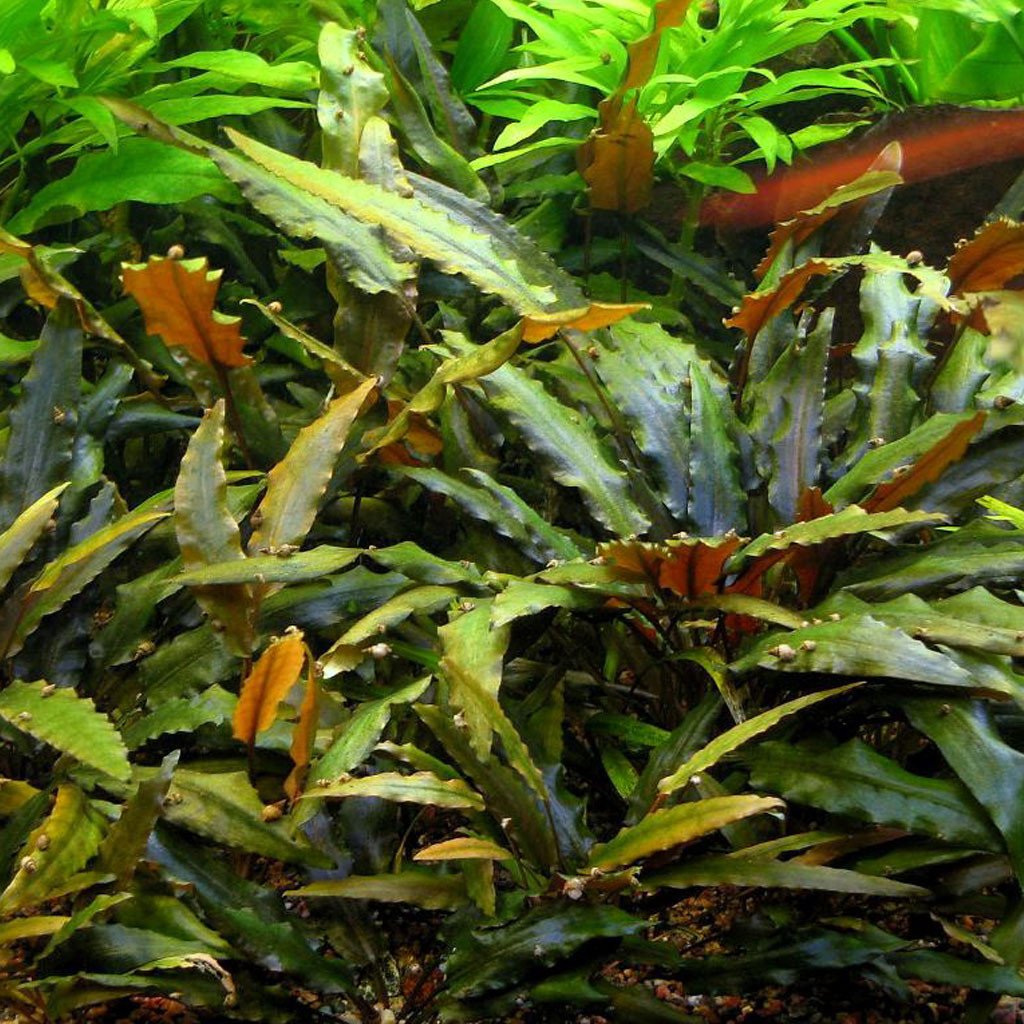


How to Keep Aquarium Plants From Floating Up
You just planted your aquarium, stepped back to admire it… and five minutes later, half your plants are floating at the surface.
It’s a common problem, especially with newly planted aquariums. Luckily, there are a few simple ways to keep your plants firmly in place.

1. Plant Them Deep Enough
One of the most common mistakes is planting too shallow.
For rooted plants like Amazon Swords, Cryptocoryne, and Vallisneria, gently push the roots into the substrate while keeping the crown of the plant above the surface.
A good rule: bury the roots, not the crown.

2. Use Enough Substrate
If your substrate layer is too thin, your plants won’t have much to hold onto.
Aim for around 2–3 inches of substrate in planted areas. This gives roots enough depth to anchor themselves as they grow.

3. Use Plant Weights
For stubborn plants, aquarium-safe plant weights can help hold them down until their roots become established.
Wrap the weight gently around the base of the plant without crushing the stems or roots. After a few weeks, the plant should develop enough roots to stay in place on its own.

4. Don't Bury Every Plant
Not every aquarium plant belongs in the substrate.
Plants such as Anubias and Java Fern have a thick horizontal stem called a rhizome. Burying the rhizome can cause the plant to rot.
Instead, attach these plants to driftwood or rocks using aquarium-safe glue, thread, or fishing line. Eventually, their roots will naturally grab onto the surface.

5. Watch Out for Fish
Sometimes the plant isn't the problem — your fish are.
Goldfish, cichlids, and other active species can dig around the substrate and uproot freshly planted plants. If this keeps happening, try surrounding the base with small rocks or choosing plants that can be attached directly to hardscape.

Give Your Plants Time
New aquarium plants may take a little time to develop strong root systems. Once established, most rooted plants become much harder to accidentally uproot.
The key is giving them enough substrate, planting them correctly, and providing a little extra support when needed.
With the right setup, your plants will stay where you put them — instead of ending up at the top of your tank!