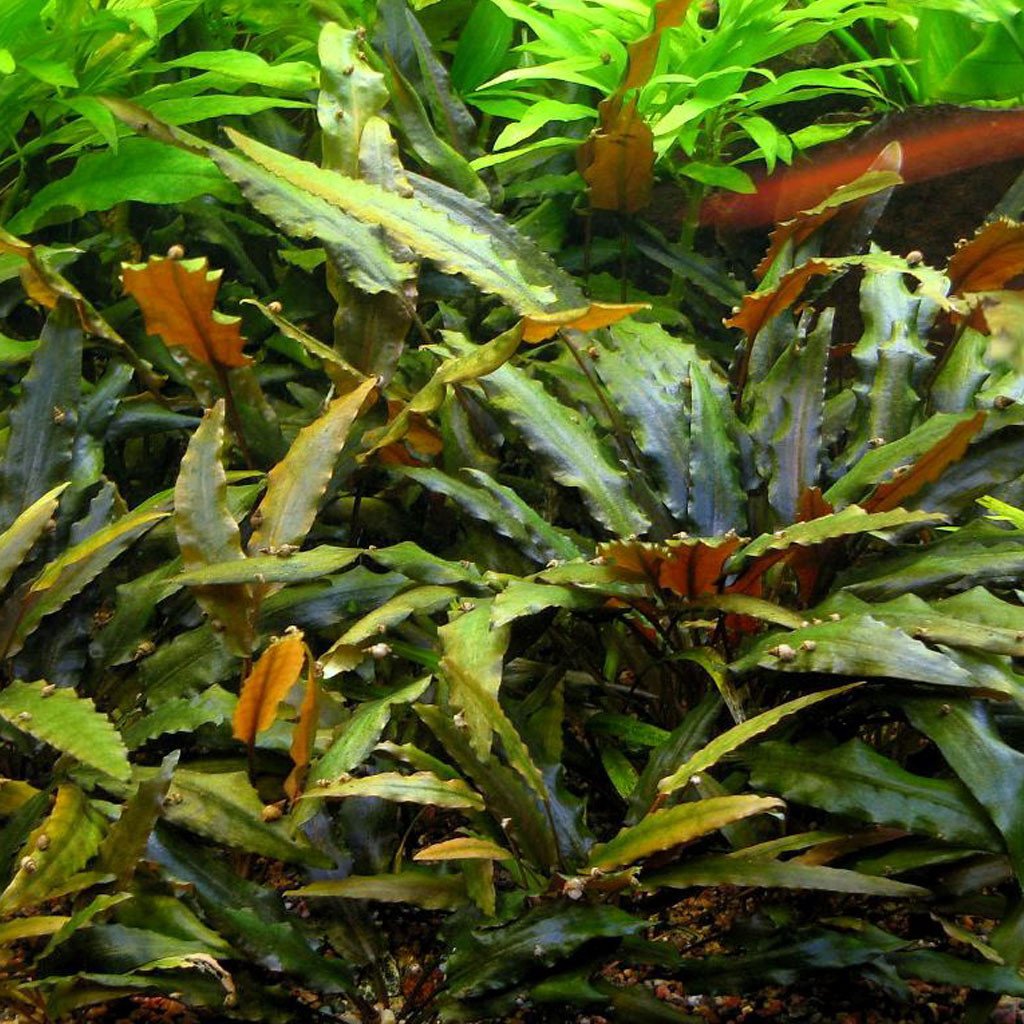


Red Flame Sword Care Guide: How to Grow Bold Red Leaves
Most aquarium plants come in one color: green. The Red Flame Sword doesn't follow that rule.
Its big, sword-shaped leaves are splashed with red and burgundy, so it adds warm color to a tank that's otherwise a wall of green. The best part? It's just as easy to grow as the classic green swords.
Here's everything you need to know to keep your Red Flame Sword healthy, growing, and showing off its best color.
What Is a Red Flame Sword?
The Red Flame Sword (Echinodorus 'Red Flame') is a cultivated hybrid sword plant, bred for its striking red-and-green leaves. It grows from a central crown, sending out broad leaves that fan out into a full, bushy plant.
One thing to clear up right away: a Red Flame Sword is not an Amazon Sword. They're both in the Echinodorus family and share a similar shape, but the Amazon Sword stays solid green. The Red Flame is its own plant, chosen for its color. (Growing the green one too? Our Amazon Sword care guide has you covered.)
Like other swords, it's a heavy root feeder, beginner-friendly, and doesn't need CO₂.


Red Flame Sword Care at a Glance
Care Requirement |
Recommendation |
|---|---|
Difficulty |
Easy |
Lighting |
Low to moderate (more light = more red) |
Temperature |
72–82°F |
pH |
6.5–7.5 |
Growth Rate |
Medium |
Max Size |
Around 12–20 inches |
CO₂ Required |
No |
Placement |
Background, or midground in large tanks |
Feeding |
Root tabs |
Propagation |
Runners and side shoots |
How to Plant Your Red Flame Sword
1. Rinse and trim. Gently rinse the roots and snip off any broken or badly damaged leaves.
2. Bury the roots, not the crown. Push the roots into the substrate, but keep the crown (where the leaves meet the roots) just above the surface. A buried crown can rot.
3. Give it room. This plant spreads wide. Place it toward the back of the tank, or as a centerpiece in the middle of a larger aquarium.
Pro Tip: Push a root tab into the substrate right next to the roots on planting day. Swords are hungry from the start, and it helps them settle in faster.
What Size Tank Does a Red Flame Sword Need?
Because it can grow 12–20 inches tall with wide-spreading leaves, the Red Flame Sword is happiest in a medium to large aquarium. A 20-gallon tank or bigger gives it room to fill out.
In a smaller tank, it can still work as a single background plant. Just expect to trim the oldest outer leaves at the base now and then so it doesn't crowd out its neighbors or shade the plants below.
Lighting: The Secret to That Red Color
Red Flame Swords are forgiving and will grow under low light. But if you want those leaves to really glow red, light is the biggest factor.
Under dim light, the plant tends to grow greener. Under moderate light, the red patches get bolder and cover more of each leaf.
- Use a full-spectrum aquarium light (around 6500K is ideal).
- Start with 6–8 hours of light per day on a timer.
- Don't let floating plants or taller plants shade it out.
A common myth is that you need to load up on iron for red color. Good lighting and steady nutrients do far more than extra iron ever will.

Feeding: Swords Eat Through Their Roots
Red Flame Swords pull most of their nutrients through their roots, so root tabs are the best way to feed them. Place one in the substrate directly next to the plant, and the roots will draw nutrients straight from it.
Liquid fertilizer helps too, but it isn't as effective on its own for a root feeder like this. In plain sand or gravel, root tabs make the biggest difference.
Replace root tabs on the schedule on the package, and add a new one when the plant grows larger.

Why Are My Red Flame Sword Leaves Melting?
If a few leaves turn yellow, brown, or see-through in the first couple of weeks, don't panic. That's usually the plant adjusting to your tank after shipping.
Many swords are grown with their leaves above water. Once they're fully submerged, they may drop some of those old leaves and replace them with new underwater growth.
Trim off leaves that are fully dead, keep your conditions steady, and watch the center for fresh leaves. As long as the crown and roots stay firm, the plant is fine. We cover this more in why aquarium plants lose leaves after shipping.
One more thing to know: sword plants are sensitive to copper. Avoid copper-based fish medications in a planted tank.
How to Propagate Red Flame Swords
A happy Red Flame Sword will make more of itself. It sends out runners and side shoots that grow into small baby plants.
Once a baby plant has a few leaves and its own roots, snip it free and plant it somewhere else in the tank. A large plant can also be carefully split at the base into separate plants.
That means one plant can slowly fill out your whole background!
Pair It With Dark Driftwood for a Moody Fall Tank
Red leaves look even better against dark wood and deep green. For a bold, moody aquascape (perfect for fall and Halloween), try this combo:
- Red Flame Sword in the background as the main splash of color
- Dark driftwood in the middle to frame it
- Java Moss attached to the wood for a soft, overgrown look


Add Some Color to Your Tank
The Red Flame Sword is one of the easiest ways to bring red into a planted aquarium. Plant the roots but not the crown, feed it with root tabs, give it good light, and be patient for the first few weeks.
Do that, and you'll have a big, bold centerpiece that keeps getting better.
Ready to grow your own?
Happy Planting! 🌿
The Marcus Fish Tanks Team