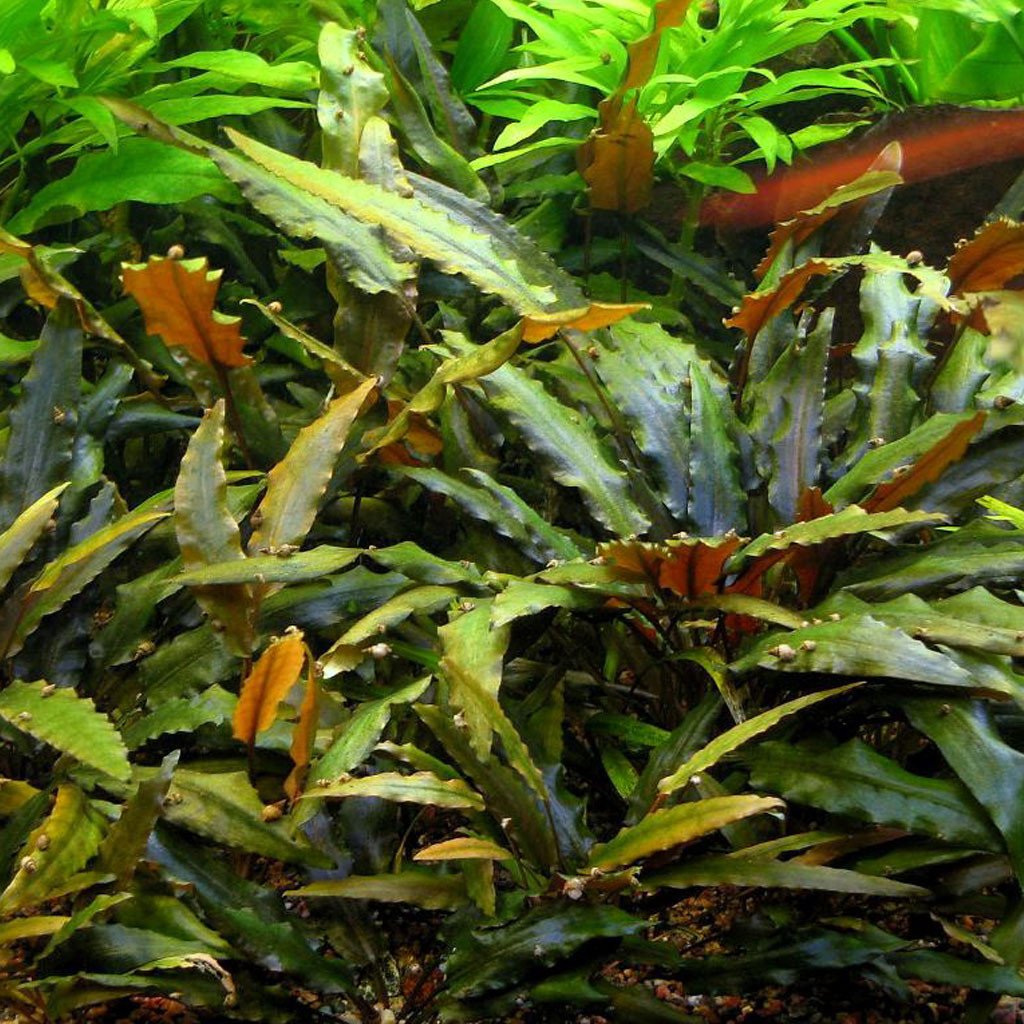


Why Are My Aquarium Plants Full of Holes?
Have you noticed your once-healthy aquarium plants developing tiny holes, tears, or ragged leaves? It can be frustrating to watch your plants decline, especially if you're doing regular water changes and fertilizing your tank.
The good news is that holes in aquarium plant leaves are usually a sign of a specific problem—and in most cases, it's something you can fix.
Let's look at the most common reasons aquarium plants develop holes and what you can do to restore healthy growth.

1. Potassium Deficiency (The Most Common Cause)
If your plants are developing small pinholes that gradually grow larger, a lack of potassium is often the culprit.
Potassium is an essential nutrient that aquarium plants use to maintain healthy leaves. Unlike some nutrients, plants can move potassium from older leaves to support new growth. As a result, the oldest leaves are usually the first to show damage.
Signs of Potassium Deficiency
- Tiny holes appearing in older leaves
- Yellowing around the holes
- Brown or transparent spots before holes develop
- New growth looks healthy while older leaves continue deteriorating
How to Fix It
Use a quality aquarium fertilizer that supplies potassium on a consistent schedule. If your plants are heavy root feeders like Amazon Swords or Cryptocorynes, adding root tabs beneath the substrate can also make a significant difference.
Remember that damaged leaves won't repair themselves. Focus on healthy new growth as your sign that the problem has been corrected.

2. Nutrient Deficiencies
While potassium is the most common cause, holes can also result from an overall nutrient imbalance.
Aquarium plants require a combination of macronutrients and micronutrients, including:
- Nitrogen
- Phosphorus
- Potassium
- Iron
- Magnesium
- Trace elements
Without a regular fertilization routine, deficiencies can begin appearing after several weeks, especially in heavily planted aquariums.
Solution
Use a balanced liquid fertilizer for water column feeders and supplement root-feeding plants with root tabs. Consistent dosing is usually more effective than large, infrequent doses.

3. Fish or Snails Eating Your Plants
Sometimes the holes aren't caused by nutrient problems at all.
Certain fish and invertebrates enjoy nibbling on live plants.
Common plant eaters include:
- Goldfish
- Silver Dollars
- Some larger Cichlids
- Buenos Aires Tetras
- Large Plecos
- Certain pond snails
If the damage appears overnight with irregular bite marks rather than tiny pinholes, hungry tank inhabitants may be responsible.
What to Do
Observe your aquarium during feeding times or after lights go out.
If fish are eating your plants:
- Feed a more varied diet
- Add faster-growing plants
- Choose tougher species like Anubias or Java Fern
- Consider whether the species is suitable for a planted aquarium

4. Older Leaves Naturally Breaking Down
Not every damaged leaf is a sign of poor plant health.
Many aquarium plants naturally shed older leaves as they produce fresh growth.
This is especially common after:
- Planting a new aquarium
- Transferring plants between tanks
- Changes in lighting
- Changes in water chemistry
Older leaves may develop transparent spots, tears, or holes before dying off completely.
Solution
Simply trim away damaged leaves and allow the plant to focus its energy on producing healthy new growth.

5. Plant Melt After Being Added
Many aquarium plants are grown above water (emersed) at commercial nurseries because it's faster and more economical.
Once placed underwater, those original leaves often "melt" as the plant transitions to submerged growth.
During this process, leaves may:
- Become transparent
- Develop holes
- Turn brown
- Fall apart completely
Although it looks alarming, this is completely normal for many species.
Solution
Be patient.
Continue providing proper lighting and nutrients while removing decaying leaves. Healthy submerged leaves should begin appearing within several weeks.

6. Too Much Light or Algae Damage
Excessive lighting without enough nutrients or CO₂ can stress plants and encourage algae growth.
Some algae attach directly to leaves, weakening the tissue until holes eventually form.
Prevent It By:
- Limiting lighting to 6–8 hours per day
- Maintaining a consistent fertilization schedule
- Performing regular water changes
- Avoiding excessive nutrients without adequate plant growth

7. Physical Damage
Sometimes the explanation is surprisingly simple.
Leaves can tear from:
- Strong filter flow
- Fish digging in the substrate
- Rough handling during planting
- Aquarium maintenance
These tears usually have clean edges rather than tiny pinholes.

How to Prevent Holes in Aquarium Plants
Keeping your plants healthy doesn't have to be complicated.
A few simple habits go a long way:
- Fertilize consistently.
- Use root tabs for heavy root feeders.
- Maintain stable lighting.
- Perform regular water changes.
- Remove dying leaves promptly.
- Watch for fish that may be eating your plants.
- Avoid sudden changes in water parameters.
Healthy, well-fed plants are much more resistant to damage and recover far more quickly.

Final Thoughts
Holes in aquarium plant leaves are usually your plants' way of telling you that something needs attention. In many cases, the solution is as simple as improving your fertilization routine or identifying fish that are nibbling on your plants.
With proper lighting, balanced nutrients, and a little patience, your plants can bounce back and produce healthy new growth that keeps your aquarium looking lush and vibrant.
If you're looking to give your plants the nutrients they need, explore our selection of aquarium fertilizers, root tabs, and healthy live plants to help your planted tank thrive.