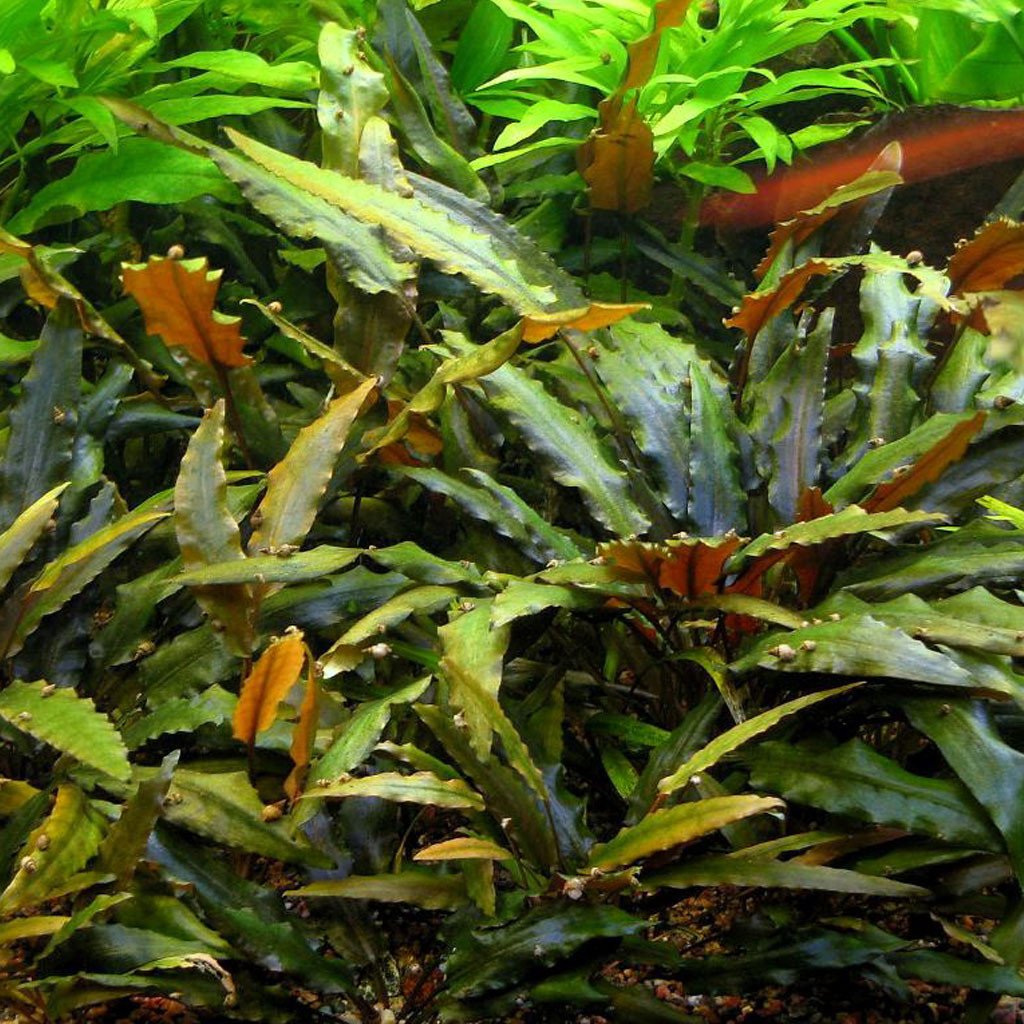


Why Are My Crypts Melting?
If you've recently added Cryptocoryne plants (often called "Crypts") to your aquarium and noticed the leaves turning brown, transparent, or completely falling apart, don't panic.
Your plant is probably experiencing what's known as Crypt Melt—a common and usually temporary reaction that happens to many Crypt varieties after they're introduced to a new aquarium.
The good news? In most cases, your Crypt isn't dying at all.

What Is Crypt Melt?
Crypt Melt occurs when a Cryptocoryne plant sheds some or all of its existing leaves after being moved to a new environment.
This often happens because the plant is adjusting to changes in:
- Water parameters
- Lighting levels
- Temperature
- Nutrient availability
- Growing conditions
Most aquarium plants sold online are grown in emersed (out-of-water) conditions. Once placed underwater, they must grow a new set of leaves adapted for submerged life.
As a result, the original leaves may begin to melt away.

What Does Crypt Melt Look Like?
Common signs include:
- Leaves turning yellow or brown
- Transparent or mushy leaves
- Leaves breaking apart
- Rapid leaf loss within a few days
Many hobbyists assume their plant has died when they see these symptoms, but the roots often remain healthy beneath the substrate.

Is My Crypt Dead?
Not necessarily.
The easiest way to tell is by checking the crown of the plant—the area where the leaves emerge from the roots.
If the crown is still firm and healthy, your Crypt will likely recover.
If the crown becomes mushy, black, or completely rotted, the plant may not survive.

How Long Does Crypt Melt Last?
Most Crypts begin recovering within 2–6 weeks.
Some may produce new leaves sooner, while others can take a bit longer depending on tank conditions.
Patience is key.
Many hobbyists throw away perfectly healthy Crypts before they've had a chance to recover.

What Should I Do During Crypt Melt?
1. Leave the Plant Alone
One of the biggest mistakes beginners make is constantly moving the plant.
Every time a Crypt is relocated, it may restart the adjustment process.
Choose a location and let it settle.
2. Trim Dead Leaves
Remove leaves that are completely melted or decaying.
This helps improve appearance and prevents excess organic waste from accumulating in the aquarium.
3. Don't Dig Up the Roots
Even if every leaf disappears, leave the roots and crown in place.
Many Crypts regrow entirely from their root system.
4. Provide Nutrients
Crypts are heavy root feeders and benefit greatly from root tabs.
Adding root tabs near the plant can help support healthy regrowth.
5. Maintain Stable Conditions
Avoid sudden changes in:
- Lighting
- Temperature
- Water chemistry
- Fertilizer dosing
Stable conditions help Crypts recover faster.

Can I Prevent Crypt Melt?
While Crypt Melt can't always be avoided, you can reduce its severity by:
- Keeping water parameters stable
- Avoiding frequent replanting
- Using nutrient-rich substrate or root tabs
- Acclimating new plants slowly
- Maintaining a consistent lighting schedule
Even under ideal conditions, some melting is completely normal.

Which Crypts Are Most Likely to Melt?
Nearly all Cryptocoryne species can experience melt, including:
- Cryptocoryne wendtii Green
- Cryptocoryne wendtii Bronze
- Cryptocoryne lutea
- Cryptocoryne beckettii
- Cryptocoryne Pink Flamingo
The good news is that most of these varieties are also excellent at bouncing back.

Final Thoughts
Seeing your Crypt melt can be alarming, especially if you're new to planted aquariums. Fortunately, Crypt Melt is one of the most common and most misunderstood events in the hobby.
In most cases, your plant isn't dying—it's adapting.
Keep the roots planted, trim away dead leaves, provide nutrients, and give it time. Before long, you'll likely see fresh new growth emerging from the crown.
Sometimes the best thing you can do for a melting Crypt is simply be patient.