

How to Plant a Tiger Lotus Bulb (and Get It to Sprout)
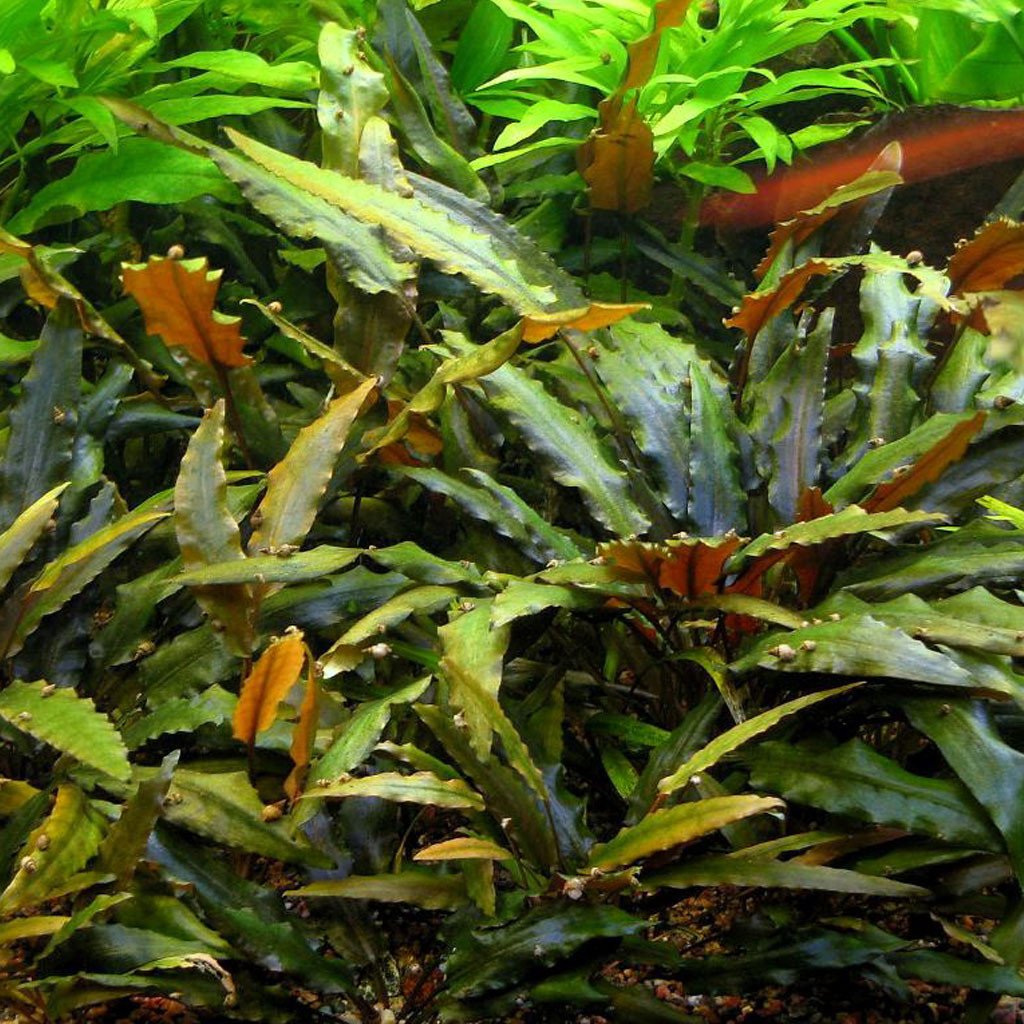
Few aquarium plants make an entrance like a Tiger Lotus. It starts as a small, unassuming bulb, and a few weeks later it can be the showpiece of your whole tank, with broad, wavy leaves speckled in deep red and maroon.
The catch? A lot of people plant the bulb the wrong way, then wait... and wait... wondering why nothing is happening.
The good news is that getting a Tiger Lotus going is simple once you know a few rules. Here's exactly how to plant your bulb, how long sprouting takes, and how to keep it growing into a stunning centerpiece.
What Is a Tiger Lotus?
Tiger Lotus (Nymphaea zenkeri) is a tropical water lily native to Africa. Unlike most aquarium plants, it grows from a bulb that sits at the bottom of your tank and sends up leaves from a single growing point.
It produces two kinds of leaves: wide, wavy leaves that stay underwater, and long-stemmed lily pads that float up to the surface. Which ones you get depends a lot on how you trim it (more on that below).
It's a fast grower and doesn't need CO₂, which makes it a great "wow" plant for beginners who want something more dramatic than the usual greens.

Bulb Only vs. Sprouted Bulb: What Arrives in the Mail
Tiger Lotus is usually sold one of two ways: as a dormant bulb with no leaves, or as a bulb that has already started sprouting.
Full-grown lilies have delicate stems that snap easily in shipping, so a sprouted bulb is the safest way to send one. That's how we ship ours at Marcus Fish Tanks: a healthy bulb that's already woken up, often with a few small leaves on it.
A sprouted bulb skips the slowest, most nerve-wracking part of the process, because you can see it's alive the moment you open the box.

How to Plant a Tiger Lotus Bulb (Step by Step)
1. Find the top of the bulb. On a sprouted bulb, it's easy: it's wherever the leaves are coming out. On a dormant bulb, look for the slightly pointed end, or "nose." That's where new growth will appear, so it always faces up.
2. Pick the right spot. Tiger Lotus gets big, so give it room in the midground or background, under direct light. Avoid planting it right under the filter output where it gets pushed around.
3. Don't bury the bulb. This is the most important rule. A fully buried bulb can rot. Instead, either:
- Set the bulb right on top of your substrate and let its roots anchor it, or
- Gently press just the bottom of the bulb into the sand or gravel, leaving the sprouted top (and most of the bulb) exposed.
4. Leave it alone. Once it's in place, resist the urge to dig it up and check on it. The roots will grab the substrate on their own, and every move sets it back.
Pro Tip: If your bulb keeps floating or rolling over before it roots, prop it between a couple of small stones until it anchors itself.
How Long Does a Tiger Lotus Take to Sprout?
In warm, stable water, new leaves usually show up within one to two weeks. A sprouted bulb will often push out new growth even sooner, since it's already active.
Dormant bulbs with no leaves can take longer, sometimes several weeks, so patience pays off.
If yours seems stuck, check these first:
- Temperature: Tiger Lotus is a tropical plant and grows best around 72–82°F. Cool water slows it down a lot, and a slightly warmer tank can help a slow bulb wake up.
- Is it buried? If the bulb is covered, uncover it so the growing point gets light.
- Is it right side up? Make sure the nose or sprout is pointing up.
- Is it firm? A healthy bulb feels firm. A soft, mushy bulb with a bad smell is likely rotting.

Feeding Your Tiger Lotus for Fast Growth and Rich Color
Tiger Lotus is a hungry plant. It pulls nutrients through its roots and from the water, so it does best when you cover both.
Root tabs: Push a root tab into the substrate a couple of inches from the bulb once it starts rooting, and replace them on the schedule listed on the package. This matters most in plain sand or gravel, which don't hold many nutrients.

Root Tabs
Feeds your Tiger Lotus right at the roots, where it does most of its eating.
Shop Root Tabs →Liquid fertilizer: A good all-in-one liquid fertilizer feeds the leaves from the water column. Iron and other micronutrients play a big part in bringing out those deep reds.
Light: Medium light is plenty for healthy growth, and stronger light brings out more red. Start around 6–8 hours a day on a timer and adjust from there.

All In One Liquid Fertilizer
Easy pump dosing to keep the leaves fed and the color rich.
Shop Liquid Fertilizer →Lily Pads or Bushy Leaves? You Choose
Once your Tiger Lotus settles in, it'll eventually send long stems up toward the surface to form lily pads. Some people love the look, and it's the only way to get the plant to flower: Tiger Lotus blooms open at night, just above the water.
The downside is that floating pads shade everything below them, and once a plant starts making pads, it tends to keep making them.
If you want a compact, bushy plant with lots of colorful underwater leaves, trim each long stem at its base, close to the bulb, before it reaches the surface. A pair of curved aquarium scissors makes it easy to reach down without disturbing the rest of the tank. Plenty of aquascapers keep one or two pads for looks and trim the rest.

Common Tiger Lotus Problems (and Quick Fixes)
All the leaves died back, but the bulb looks fine
Tiger Lotus can go through a short dormant period, dropping its leaves and resting before it starts again. If the bulb is still firm, leave it where it is and keep conditions stable. New leaves usually return.
It's growing fast but staying green
Color comes down to light and nutrients. Give it a bit more light and keep up with your fertilizer. For a deeper dive, read our guide on why a Red Tiger Lotus isn't turning red.
It's taking over the tank
That's a sign it's happy! Trim lily pads and older leaves at the base, and give it more room than you think it needs. A mature plant can grow around two feet tall and nearly as wide in a big tank.
There's a small bulb next to the big one
Healthy plants can form little daughter bulbs or side shoots. Once they've grown their own roots and leaves, you can gently separate them and plant them somewhere else, which means a free plant!
Give Your Tank a Centerpiece
Planting a Tiger Lotus comes down to a few simple rules: keep the top up, don't bury the bulb, keep the water warm, and feed it well. Do that, and a tiny bulb can turn into the plant everyone notices first.
Ready to grow your own?
Happy Planting! 🌿
The Marcus Fish Tanks Team